

What is a Smart Contract?
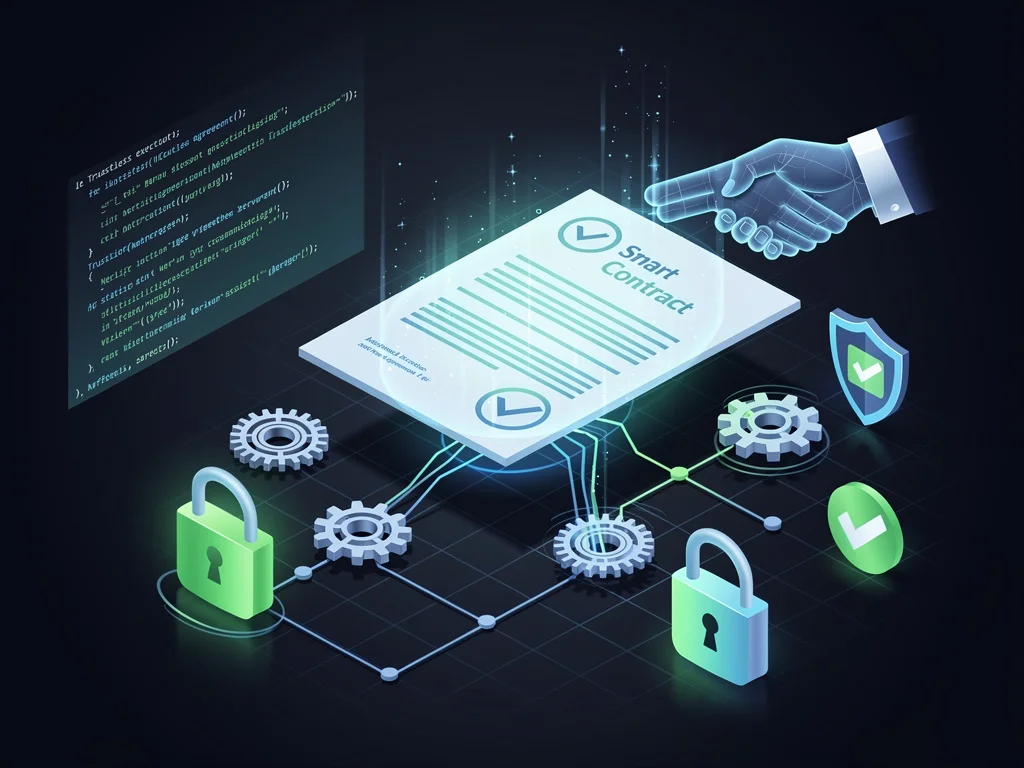
A Smart Contract is a program stored on the blockchain that automatically executes when predetermined conditions are met. It automates the execution of agreements so that all participants can be immediately certain of the outcome, without intermediary involvement or time loss.
Smart contracts are the foundation of the decentralized economy: they enable the creation of transparent, secure and immutable agreements without the need for trusted third parties.
Self-executing and require no intermediaries
Provide high security and transparency
Immutable and tamper-proof
Flexible and programmable for any business logic

How do Smart Contracts work?
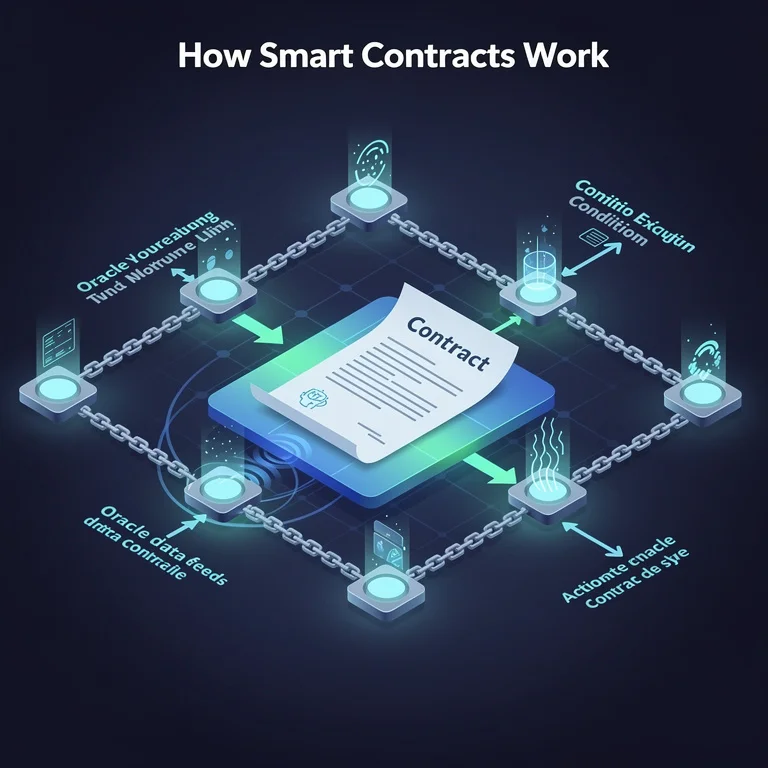
Smart contracts are stored on a blockchain and are activated when certain conditions are met. They automate the execution of agreements so that all participants can be immediately certain of the outcome, without intermediary involvement.
A smart contract requires Blockchain Oracles to fulfill its function. The Oracle is a tool that monitors network activity to verify and fulfill the commitments of the parties without the need for intervention.
- Eliminate intermediaries in legal and financial fields
- Simplify and automate routine and repetitive processes
- Remove the need for lawyers and banks in the process
- Blockchain Oracles validate contract conditions
Advantages and disadvantages of Smart Contracts
It is important to understand both the benefits and limitations of smart contracts before implementing them in your project.
Advantages
Self-executing
Provide high security and transparency
Tamper-proof
Flexible and programmable
Immutable
Private and confidential
Disadvantages
Not fully regulated
Vulnerable to hacking if not audited
Not well understood by the general public
Can be complex to create
Not always legally binding
Still a relatively new technology
Which blockchain should I choose for my Smart Contract?
Choosing the right blockchain for your project is crucial. The decision depends on multiple factors such as scalability, gas costs and the developer community.





If you are unsure which blockchain best suits your project, our team can help you select the most suitable network.
Request consultingHow do we develop your Smart Contract?
Our development process ensures secure, efficient smart contracts optimized for your specific use case.

01
Requirements analysis
We study your use case, define the contract logic, identify the necessary standards (ERC-20, ERC-721, ERC-1155) and select the most suitable blockchain for your project.
02
Architecture design
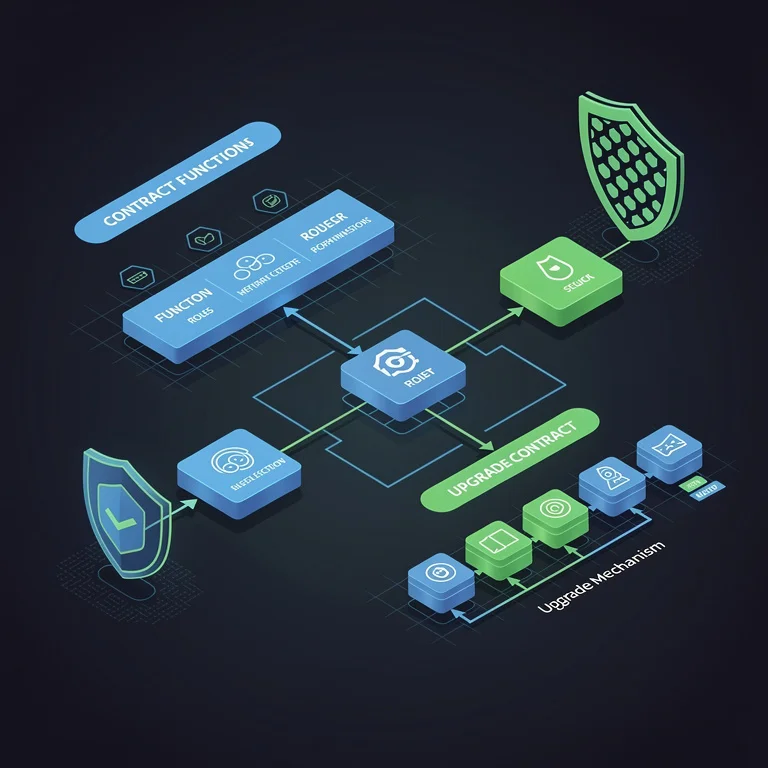
We design the contract architecture: functions, roles, permissions, security patterns and upgrade mechanisms. We document every technical decision.

03
Solidity development
We write the code in Solidity following security best practices. We use battle-tested libraries like OpenZeppelin and industry-standard design patterns.

04
Testing and auditing
We run unit, integration and stress tests. We perform security audits looking for vulnerabilities such as reentrancy, overflow and front-running.
05
Testnet deployment
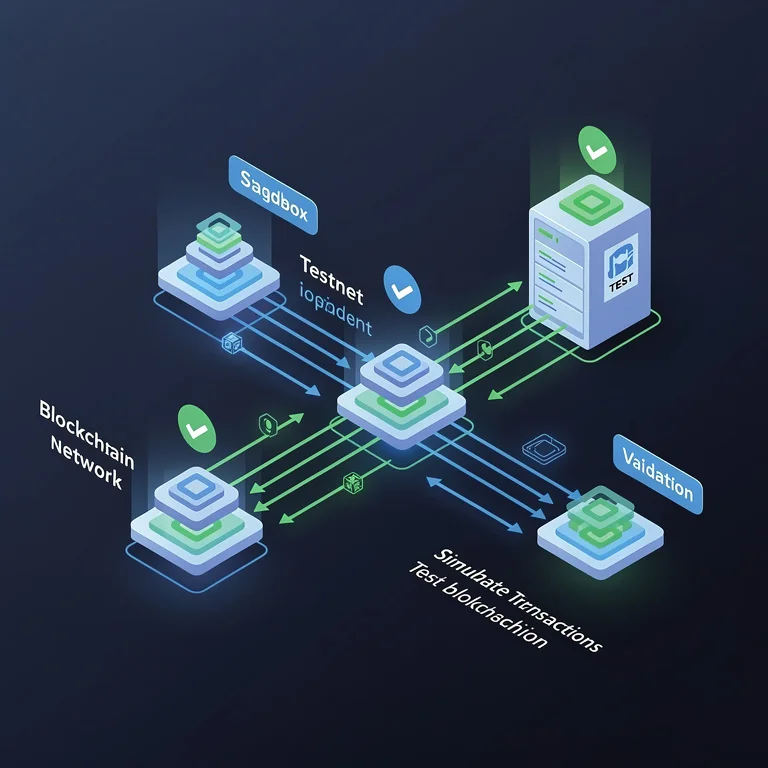
We deploy on test networks to validate the complete contract functionality in a real environment before the mainnet launch.

06
Mainnet deployment
We launch the contract on the main network with code verification on block explorers. We provide complete documentation and post-launch support.
We offer smart contract development services with extensive experience in creating advanced protocols and virtual machines. We specialize in various protocols and standards: ERC-20, ERC-721, ERC-721a, ERC-777, ERC-1155, ERC-3643 (security tokens), ERC-4337 (account abstraction), NEP-5, NEP-11, NEP-17, TZIP-7 and TZIP-12.
If you need to develop a secure and efficient smart contract, we are here to help. Request information with no obligation about our smart contract development and auditing services.

Why choose Beltsys Labs for your Smart Contract development?
Our company has been developing blockchain and web3-based solutions since 2016. We have a team of developers specialized in Solidity with years of experience building enterprise-level smart contracts for companies worldwide.

800+ Smart Contracts deployed

10+ EVM-compatible networks

0 Hacks in our contracts

15+ Years of experience
Frequently asked questions about Smart Contracts
We answer the most common questions about our smart contract development and auditing services.
A Smart Contract is a computer program stored on the blockchain that automatically executes when predefined conditions are met. It works as a self-executing digital agreement that eliminates the need for intermediaries, ensuring transparency, security and immutability in transactions.
We develop contracts for all major standards: ERC-20 (fungible tokens), ERC-721 and ERC-721a (NFTs), ERC-1155 (multi-token), ERC-777 (advanced tokens), ERC-3643 (regulated security tokens) and ERC-4337 (account abstraction), as well as standards from other networks such as NEP-5, NEP-11 and NEP-17 (NEO) and TZIP-7 and TZIP-12 (Tezos).
We work with multiple networks: Ethereum, Polygon, BNB Chain, Avalanche, Solana, Arbitrum, Optimism, Base, Tron, Moonriver, Polkadot and other EVM-compatible networks. The choice depends on the project type, gas costs, transaction speed and the specific requirements of your use case.
Our process includes static Solidity code review, known vulnerability analysis (reentrancy, overflow, front-running), exhaustive unit and integration testing, use of audited libraries like OpenZeppelin, and a complete security audit before deployment. Our track record of zero hacks across over 800 contracts speaks for itself.
ERC-3643 (also known as T-REX) is the standard for security tokens on Ethereum. It enables the tokenization of regulated assets such as equity, bonds, real estate or investment funds, embedding compliance controls directly into the smart contract. It includes on-chain identity management, whitelists of verified investors, jurisdiction-based transfer restrictions and automated regulatory compliance (KYC/AML). It is ideal for companies that need to issue security tokens complying with regulations such as MiFID II, SEC or MiCA.
ERC-4337 is the Account Abstraction standard that transforms traditional wallets (EOA) into smart contract wallets with advanced functionality. It enables gasless transactions where a third party pays the fees, social account recovery without seed phrases, batched transactions, customizable spending policies and multi-factor authentication. It is key to improving the user experience in Web3 applications and driving mass blockchain adoption.
It depends on complexity. A basic ERC-20 token can be ready in 1-2 weeks. More complex contracts such as DeFi protocols, NFT marketplaces or governance systems may require 4 to 12 weeks including testing and auditing. At Beltsys we work with agile methodologies to deliver value from the earliest phases.
Request information with no obligation!
Get a free consultation and tell us about your project.